Targeting the Blood–Brain Barrier: Pharmaceutical Nanotechnology Approaches in Neurotherapeutics
DOI:
https://doi.org/10.64474/3107-6386.Vol2.Issue1.3Keywords:
- Blood–Brain Barrier; CNS Drug Delivery; Nanocarriers; Neurotherapeutics; Receptor-Mediated Transcytosis; Biomimetic Nanoparticles; Lipid Nanoparticles; Nanomedicine
Abstract
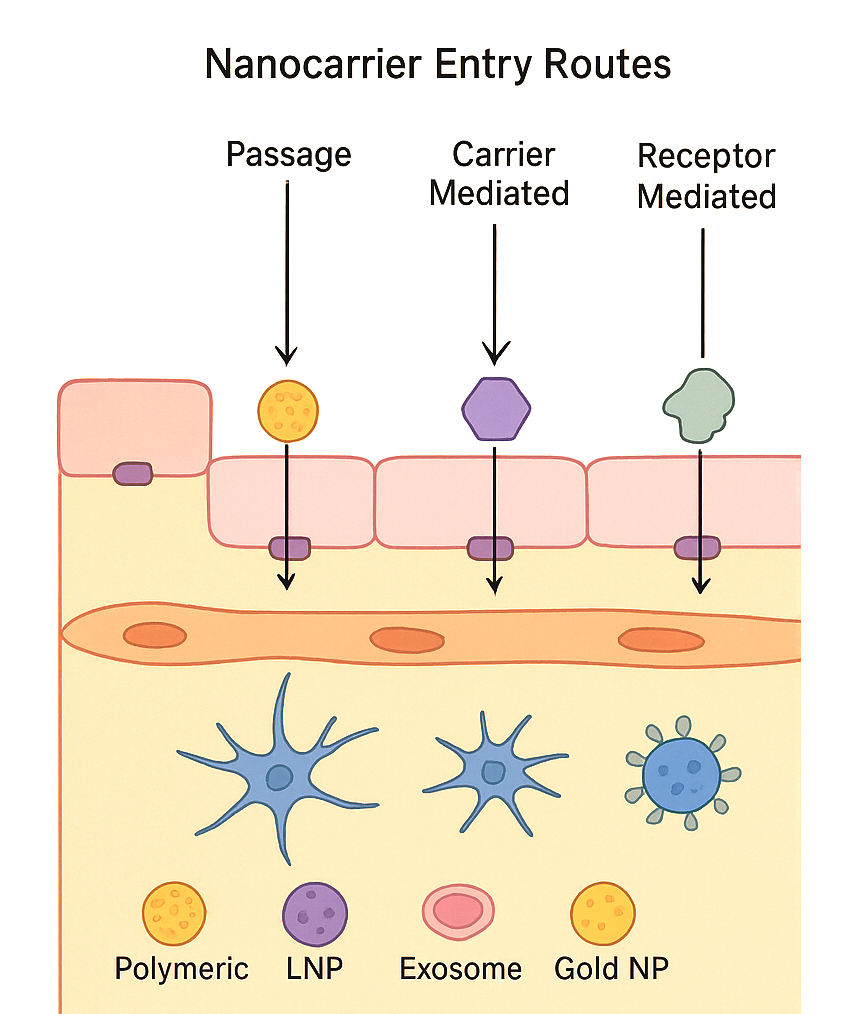
Crossing the blood–brain barrier (BBB) remains one of the greatest challenges in treating central nervous system (CNS) disorders, including Alzheimer’s disease, Parkinson’s disease, glioblastoma, and stroke. The BBB’s tightly regulated architecture—comprising endothelial cells, pericytes, astrocytes, and multifunctional transport systems—limits the penetration of most therapeutics, from small molecules to biologics. Nanotechnology has emerged as a transformative approach to overcome these delivery barriers by enabling precise engineering of size, surface chemistry, targeting ligands, and stimuli-responsive features. This review provides a comprehensive overview of the anatomy and physiology of the BBB, the key obstacles in CNS drug delivery, and the diverse classes of nanocarriers developed to enhance brain targeting, including polymeric nanoparticles, lipid-based systems, inorganic nanomaterials, biomimetic vectors, and hybrid multifunctional platforms. Advanced targeting strategies—such as receptor-mediated, carrier-mediated, and adsorptive-mediated transcytosis, along with focused ultrasound and intranasal delivery—are critically discussed for their therapeutic potential. We also examine pharmacokinetics, biodistribution, safety considerations, and the preclinical tools available for evaluating nanocarrier performance. Finally, we highlight ongoing challenges, regulatory constraints, and emerging trends such as AI-driven design, personalized neuro-nanomedicine, and next-generation BBB-on-chip systems. Together, these insights underscore the transformative potential of nanotechnology in shaping the future of neurotherapeutics.