Integrating Nanotheranostics, Omics, and Artificial Intelligence for Precision Multi-Organ Cancer Management: A Systematic Review
Keywords:
- Nanotheranostics, Omics, Artificial Intelligence, Multi-organ cancer, Precision oncology, Biomarker discovery, personalized therapy
Abstract
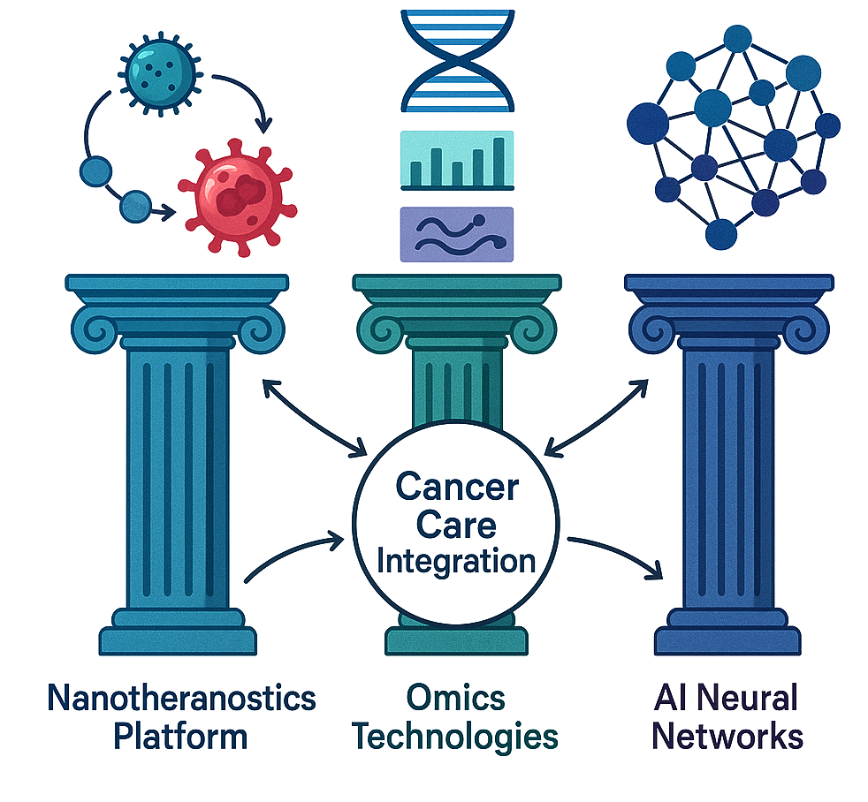
Background: Cancer remains one of the leading global health challenges, characterized by profound heterogeneity at the genetic, molecular, and microenvironmental levels. Conventional therapies often fail due to late detection, therapeutic resistance, and systemic toxicity, underscoring the need for more precise and adaptable strategies.Objective: This systematic review synthesizes recent advances (2019–2024) in nanotheranostics, omics technologies, and artificial intelligence (AI), highlighting their convergence as a framework for precision multi-organ cancer management.Methods: Following PRISMA guidelines, a comprehensive literature search was conducted across PubMed, Scopus, Web of Science, ScienceDirect, and PMC. Eligible studies included original research on nanotheranostic platforms, omics-driven biomarker discovery, and AI-based oncology applications. Data were extracted on study design, cancer type, nanoplatform features, omics datasets, AI/ML models, and translational outcomes.Results: Nanotheranostics have advanced from multifunctional nanoparticles (e.g., gold nanoparticles, liposomes, polymeric systems) toward smart, stimuli-responsive platforms guided by AI and omics data. Omics approaches including genomics, transcriptomics, proteomics, metabolomics, and radiomics enable biomarker discovery, patient stratification, and target identification, while AI enhances nanoparticle design, predictive modeling, and real-time treatment adaptation. Applications span multiple cancers, including liver, breast, lung, pancreatic, and brain tumors. Challenges remain in overcoming tumor microenvironment heterogeneity, organ-specific barriers, biosafety concerns, and clinical translation, though early clinical studies report promising outcomes.